

What Makes River Kwai Jungle Rafts Different From Every Other Hotel in Thailand?
Most hotels promise a “unique experience.” River Kwai Jungle Rafts actually delivers one.
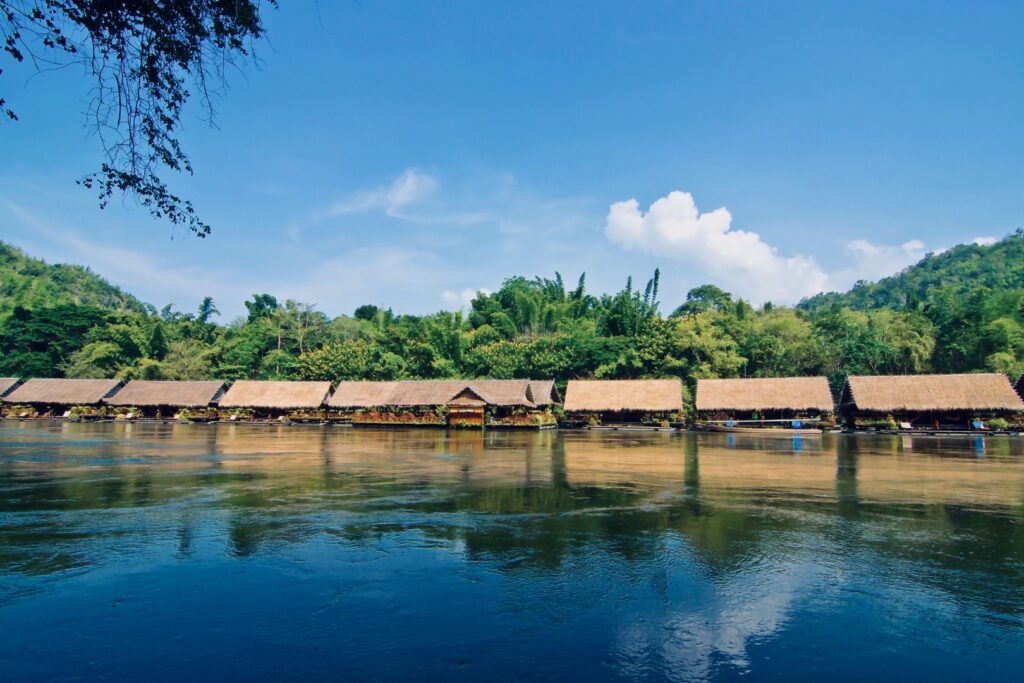
Floating directly on the River Kwai Noi in the heart of Kanchanaburi’s jungle, this resort is not built beside a river — it is the river. Bamboo raft rooms drift gently on the water’s surface, tethered to the riverbank but surrounded by nothing except forest, birdsong, and the soft current beneath you.
There are no roads to get here. No electricity after dark. No Wi-Fi. Just lantern-lit evenings, cool river breezes, and a night sky you can actually see.
This is not glamping with extra steps. This is one of the last genuinely wild hotel experiences in Southeast Asia.
Frequently Asked Questions
| Q Is River Kwai Jungle Rafts actually floating on water? A Yes — completely. The guest rooms are bamboo raft structures that float directly on the River Kwai Noi. The resort is accessible only by boat, making it one of the few hotels in Thailand with no road access whatsoever. When you sleep here, you feel the gentle movement of the river beneath you throughout the night. |
| Q Does River Kwai Jungle Rafts have electricity? A The resort operates without mains electricity. Evenings are lit by oil lanterns, creating an atmospheric, screen-free environment. This is a deliberate design choice — and one of the most memorable parts of staying here. Guests frequently describe it as the first time they’ve truly disconnected in years. |
| Q How do you get to River Kwai Jungle Rafts? A The resort is reached by longtail boat from a pier near Kanchanaburi town, approximately 2–3 hours from Bangkok by road. There is no road access to the resort itself — arrival by boat is the only option, which begins your jungle adventure from the moment you depart. |
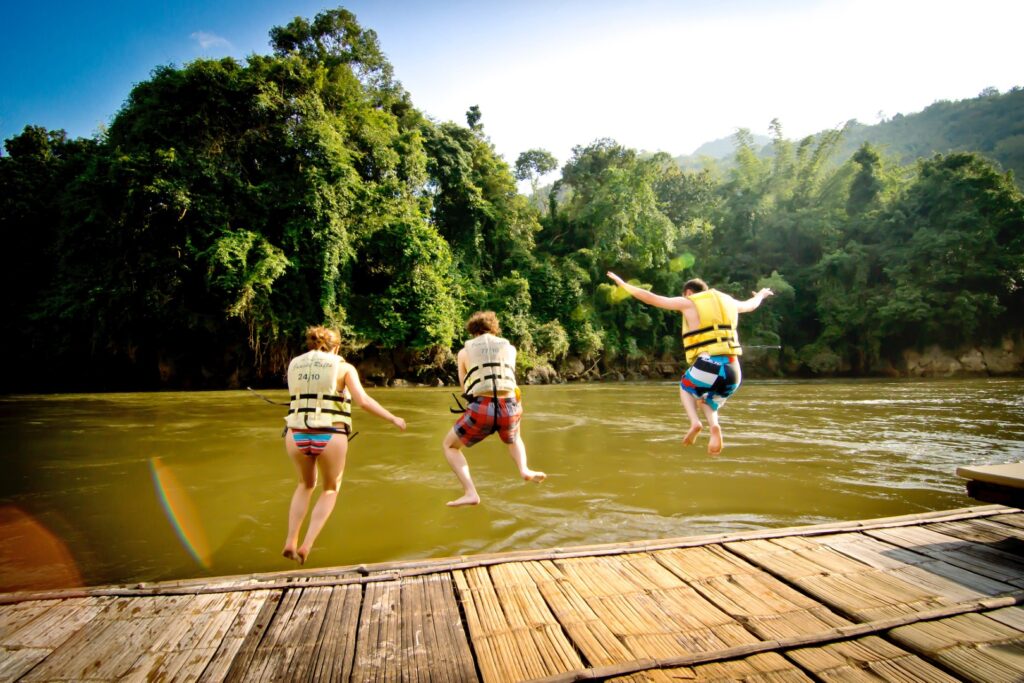
| Q What is the River Kwai Jungle Rafts experience like? A Guests wake up to mist rising off the river, swim directly from their raft, observe wild elephants working along the riverbank, and fall asleep to jungle sounds with no light pollution. Activities include elephant watching, river swimming, jungle trekking, bamboo rafting, and exploring local Mon villages nearby. |
| Q Is River Kwai Jungle Rafts suitable for families? A Yes. The experience is particularly memorable for children who have never experienced a night without electricity or screens. The safe, enclosed raft environment and proximity to wildlife make it an extraordinary family adventure. |
The River Kwai Jungle Rafts Experience: What to Expect
Arrival by Boat
Your stay begins before you arrive. The longtail boat journey through narrowing river channels, past limestone cliffs and dense jungle, signals a genuine transition — from the modern world into something older and quieter. There are no check-in counters visible from a car park. Just the river, and the rafts emerging around a bend.
Raft Rooms on the Water
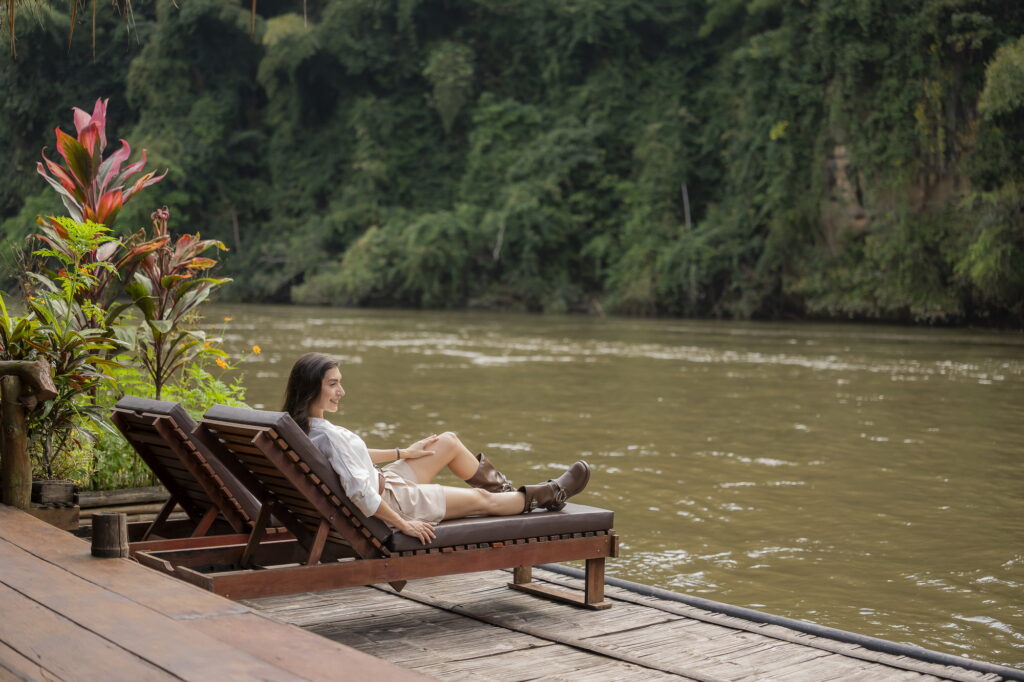
Guest rooms are spacious bamboo structures built on floating platforms. They sway gently with the current. Each room faces the river, framing a view that changes with the light — green-gold at dawn, silver at midday, deep shadow at dusk. Facilities are simple and deliberately so: comfortable beds, mosquito nets, cold-water showers, and oil lanterns.
Evenings Without Electricity
When the lanterns are lit at dusk, the resort transforms. There are no screens competing for attention. Conversations happen around communal dining tables. The river reflects fire light. Stars appear in numbers most guests haven’t seen since childhood. This enforced simplicity is, for most visitors, the highlight of the stay.
Wildlife Along the River
The River Kwai Noi corridor is home to working elephants, river birds, monitor lizards, and — with luck — glimpses of jungle wildlife from the water. Elephants are visible at work along the riverbanks, making early morning hours on the raft particularly rewarding for wildlife watchers and photographers.
Kanchanaburi Beyond the River: What to Explore
Erawan National Park — Seven-Tiered Emerald Falls
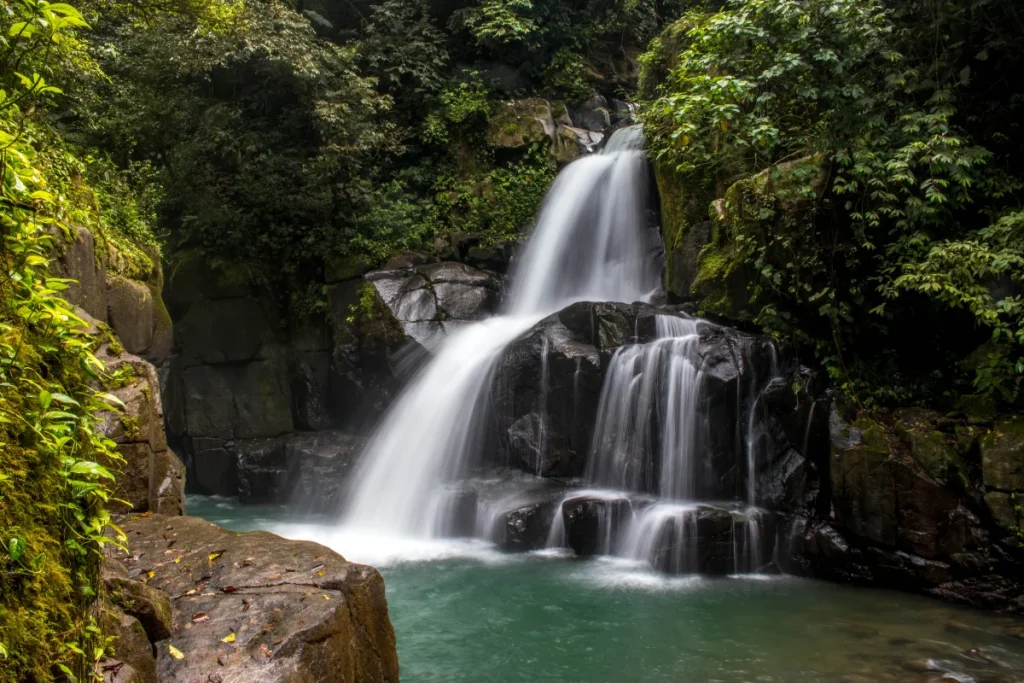
Erawan is one of Thailand’s most photographed natural wonders — a series of seven emerald-green tiered waterfalls accessible by forest trail. The lower tiers are swimmable, populated by small fish that create a natural exfoliation experience. The upper tiers reward with solitude and extraordinary colour. Best visited February to April, before the rainy season.
The Bridge on the River Kwai & Death Railway
No visit to Kanchanaburi is complete without the weight of its Second World War history. The iconic steel bridge spans the River Kwai Yai in the town centre. The Death Railway Museum documents the construction of the Thailand-Burma Railway, during which over 90,000 labourers and 16,000 Allied POWs died. The collection of war objects, photographs, and personal journals is sombre, important, and deeply moving.
Three Pagodas Pass — A Storied Border Crossing
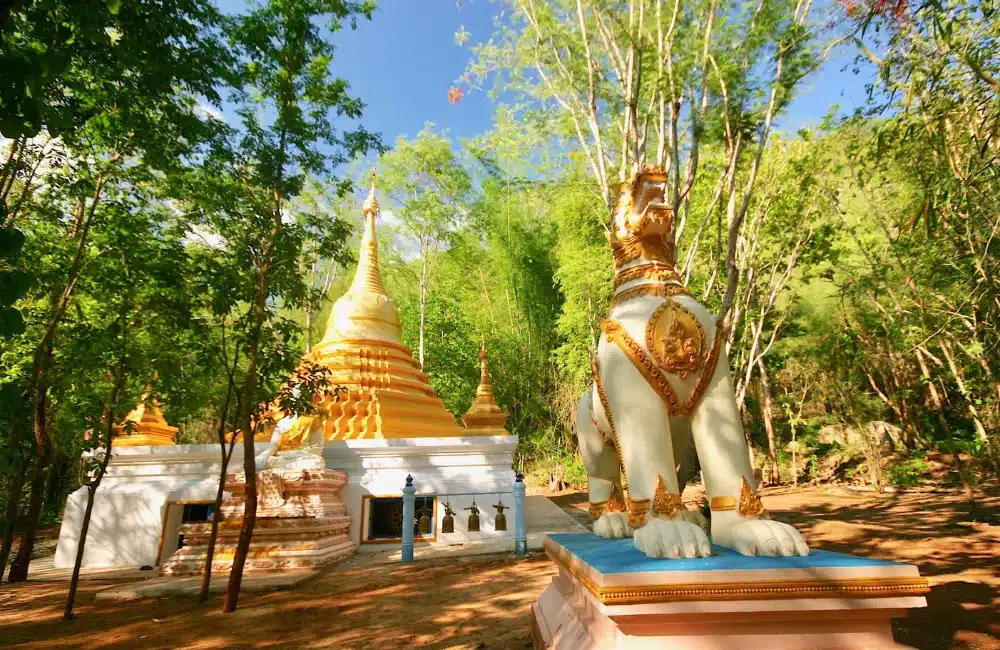
Located approximately 200 km north of Kanchanaburi at the Myanmar border, Three Pagodas Pass has served as a Burmese-Thai crossing point since the Ayutthaya period (circa 1548). Three small white chedis mark the crossing. The surrounding town of Sangkhla Buri, home to Mon and Karen communities, is worth an overnight stay in its own right.
Sai Yok National Park — Waterfalls, Caves & Wildlife
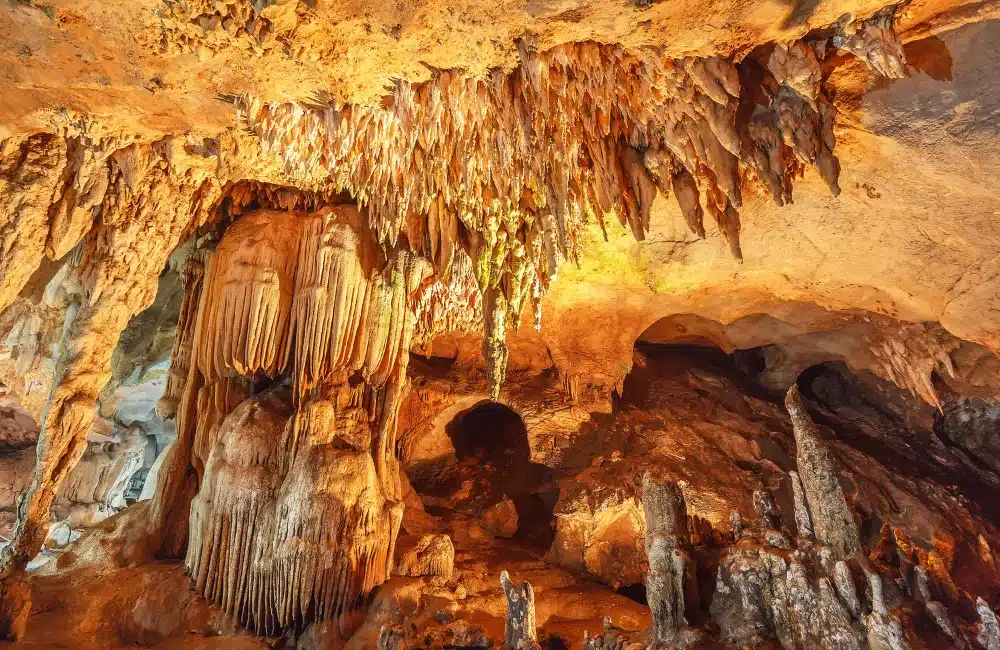
Sai Yok National Park encompasses dramatic karst limestone formations, river caves, and waterfalls. The park is home to Kitti’s hog-nosed bat — the world’s smallest mammal, found only in this region of Thailand. River rapids at Kaeng Raboet offer white-water experiences for adventurous visitors.
Hin Dat Hot Springs — Natural Thermal Pools
Situated along Highway 323 near Thong Pha Phum, the Hin Dat Hot Springs emerge at approximately 55°C beside a cool-water stream. Long used for therapeutic properties — particularly for rheumatism and skin conditions — these springs offer a peaceful stop most international visitors overlook entirely.
Bo Phloi — Sapphires and Semi-Precious Stones
Approximately 40 km from Kanchanaburi city, Amphoe Bo Phloi has been a centre of gemstone mining for generations. The area’s blue sapphires and onyx are internationally traded. Visitors can tour a Jewelry Handicraft Centre to watch artisans shape raw stones into finished jewellery.
Muang Singh Historical Park — Ancient Khmer Ruins
At Tambon Lat Ya, the ruins of Muang Singh reveal a Khmer border settlement from the Ayutthaya-Rattanakosin eras. Rectangular earthen walls measuring 167 × 355 sq metres still stand, enclosing Buddhist temples, brick chedis, and a Phra Prang tower. Quieter than better-known Khmer sites elsewhere, Muang Singh rewards those who seek history off the tourist trail.


Why River Kwai Jungle Rafts Is the Right Base for All of This
Kanchanaburi’s attractions spread across three distinct zones: the town’s historical sites, the national parks to the northwest, and the border region further north. River Kwai Jungle Rafts occupies a position that makes day trips to each zone practical, while offering an accommodation experience no hotel in any city can match.
You can spend your morning watching wild elephants from your raft, take a longtail boat to a pier for a car transfer to Erawan, return at sunset, and eat dinner by oil lamp on the water. No chain hotel can compete with that itinerary.
Practical Information
| Location | River Kwai Noi, Kanchanaburi Province, western Thailand |
| Access | By longtail boat only — no road access |
| Electricity | None (lantern-lit evenings) |
| From Bangkok | Approximately 130 km / 2–3 hours by road to the pier |
| Best Season | November to April (dry season) |
| Ideal For | Couples · Families · Nature lovers · Digital detox seekers · Photographers |